DarkTiger Tarot

The Fool

Christmas deck

Choose a deck

The Fool in each deck. Pick one to see its art and its reading.

Version

All the keywords for this card

The Fool Upright

  • beginnings
  • leap
  • freedom
  • trust
  • innocence

The Fool Reversed

  • recklessness
  • no landing
  • chaos

0Aleph, a Hebrew letter, value 1, path 11. Uranus.

The versions of The Fool in the Christmas deck

Intuitive
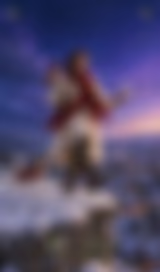
The picture, with the card's name and symbols printed on it. No keywords. Read it before you read anything else.
Reader's
The keywords on the face: beginnings, leap, freedom, trust. Reversed: recklessness, no landing, chaos.
Astrological
Uranus.
Kabbalistic
Aleph, value 1, path 11.
Framed
The picture inside a navy frame, with the card's name below it.

The meaning of The Fool

The Fool is the card of the first step, taken in trust with the eyes on the sky. He asks what you would start if the step were all that was asked of you today.

The same meaning, five ways

Bible: "Most certainly I tell you, unless you turn, and become as little children, you will in no way enter into the Kingdom of Heaven." (Matthew 18:3, World English Bible)

Bhagavad Gita: "Meditate! And, as thou wilt, then act!" (Bhagavad Gita 18:63, in Edwin Arnold's translation, The Song Celestial) Look first, then step.

Quran: "And if any one puts his trust in Allah, sufficient is (Allah) for him." (Surah At-Talaq 65:3, Yusuf Ali translation) The step taken in trust.

Wiccan: "if that which thou seekest thou findest not within thee, thou wilt never find it without thee." (From the Charge of the Goddess, in Doreen Valiente's wording) The search starts inside the one who sets out.

Everyday: "A journey of a thousand miles begins with a single step." (Tao Te Ching, chapter 64, attributed to Laozi) The whole road starts at the foot over the edge.

Worked examples

Example readings. The people are invented and the cards were chosen to teach.

The Fool upright in love and relationships

Dana, invented. Keywords blended: trust, beginnings, innocence.

Two months in with someone new, and I keep bracing for it to go wrong. What does this card say about that?

Reader: The Fool is the card of beginnings, and the word beside it is trust. Look at the picture. One foot is already past the edge and his eyes are on the sky, not on the drop. Bracing for the fall is looking at the drop. The card shows the other posture: a beginning entered with trust. Innocence here does not mean naive. It means you have not yet collected reasons to doubt this person, and the card asks whether the reasons you are bracing against belong to this person or to the last one.

Dana: So I should relax?

Reader: The card does not tell you what to do. It shows two ways of standing at an edge. Which one are you standing in today, and what would the other one look like this week?

The Fool reversed with money

Marcus, invented. Keywords blended: recklessness, no landing, against the upright trust.

I have about four months of savings and an idea for a small business. Is this the time?

Reader: Reversed, the Fool's words turn over: recklessness and no landing. Upright, the card is a step with the eyes up. Reversed, it is a jump with no ground under it. The card does not call the idea bad. It names the one thing your question leaves out: where the foot comes down. Four months of savings is the landing you have.

Marcus: And if the business is not standing by then?

Reader: Then the card is describing a leap, not a step. What would turn it into a step? A second income for the first year, a smaller first version, a date you stop? The card asks you to draw the ground before you jump. Where does your foot come down?

The Fool upright at work

Priya, invented. Keywords blended: leap, freedom, beginnings.

I was offered a role in a field I have never worked in. Everyone says I am crazy to leave a safe job.

Reader: 'Everyone says I'm crazy' is the Fool's whole reputation. The old writers put a beast at his heel and called it pursuit. The card itself shows a leap into a beginning, and the bundle is small. Freedom on this card is travelling light: you take only what you can carry. So the question is what comes with you from the safe job. Skills come. A title stays.

Priya: The skills come. The title stays.

Reader: Then the bundle is packed. The card is not about the whole road. It asks only what the first step is. So what is your first step?

The Fool upright for yourself

Tom, invented. Keywords blended: beginnings, innocence, trust.

I feel like I have to start over at fifty-two and I am ashamed of it.

Reader: The Fool has no number. He is zero, and that is the point: he is not behind the other cards, he is before them. Starting over is the one thing this card does without shame. Innocence here is the state before the reasons pile up, not ignorance. Trust on this card is trust in the step, not in a result.

Tom: That sounds like a kind way of saying I failed.

Reader: The card does not grade the past. It shows where the eyes are at the moment of the step. Where are yours?

Letter, Tree of Life and sky

These are the fixed links every card carries. A Major Arcana card has a Hebrew letter and a path on the Tree of Life, the Kabbalah diagram of ten spheres joined by twenty-two paths. A Minor card has an element and a place in the Tree's scheme: one of its ten spheres, or for a court card one of its four worlds. Every card also has a sky: a planet, a sign or an element. These links connect the card to astrology and to Kabbalah, and most of them come from the Golden Dawn's tables, as this deck's card system records them.

Letter
א Aleph, value 1
Path
11 on the Tree of Life
Sky
♅ Uranus
Element
Air, given by the Golden Dawn through Aleph TEXT
Color
Bright pale yellow, the Golden Dawn's color for the Fool's path TEXT
Planet
Uranus, which decks descended from the Golden Dawn add, found in 1781 and turning on its side TEXT

The deck this card is from

This Fool is from the Christmas deck, 78 cards. The Intuitive version is the one printed. See the deck.

The card of the day by email, and one note when a deck can be ordered.

Sources for this page

  • Arthur Edward Waite. The Fool looks at the blue distance, not the drop below. The Pictorial Key to the Tarot (1910), Wikisource (text read, accessed 2026-10-18)
  • Antoine Court de Gébelin. The Fool as the zero of the count, the card that takes nothing and that nothing takes. Le Monde primitif, volume 8 (1781), "Du Jeu des Tarots", archive.org scan; our translation from the French (text read, accessed 2026-10-18)
  • Lao Tzu. Thirty spokes meet at one hub, and the use of the wheel depends on the empty space. Tao Te Ching, chapter 11, James Legge's translation (1891), Project Gutenberg 216 (text read, accessed 2026-10-18)
  • Joseph Campbell. The crossing of the first threshold, the fear of "the first step into the unexplored", and the refusal of the call. The Hero with a Thousand Faces (1949), as quoted in Wikipedia, "Monomyth"; the book itself not opened (through a secondary source, accessed 2026-10-18)
  • Etteilla. A wise man pursued by tigers; the Fool lifted above the count. Manière de se récréer avec le jeu de cartes nommées Tarots (1783), second cahier, archive.org scan; our translation from the French (text read, accessed 2026-10-18)
  • Eliphas Levi. A tiger biting the Fool; the unnumbered Fool set just before the last card. Transcendental Magic, A. E. Waite's English translation (1896), pages 268 and 369 (text read, accessed 2026-10-18)
  • Papus. A dog biting the leg of a man who never looks down; the Fool just before the last card. The Tarot of the Bohemians (1889), A. P. Morton's translation (1896), pages 185 to 186 (text read, accessed 2026-10-18)
  • Antonio Damasio. Feelings in the body steer decisions, and in gambling experiments people learned to avoid the risky decks before they could say why. The somatic marker hypothesis, set out in Descartes' Error (1994); the gambling experiments are the Iowa gambling task, Bechara, Damasio, Tranel and Damasio, Science (1997). Read through Wikipedia, "Somatic marker hypothesis"; the papers themselves not opened (through a secondary source, accessed 2026-10-18)
  • Paul. "God hath chosen the foolish things of the world to confound the wise." 1 Corinthians 1:27, King James Version (text read, accessed 2026-10-18)
  • C. G. Jung. The fairytale simpleton who wins where the clever fail, and the trickster as "a forerunner of the saviour". Jung does not write about the tarot Fool here; the pairing is ours. "On the Psychology of the Trickster-Figure", Collected Works 9i, paragraphs 456 and 472, as printed in Four Archetypes (text read, accessed 2026-10-18)
  • The Golden Dawn. The Fool with Aleph and air, and its two meanings, one for a question of the spirit and one for a question of the world. Book T, "Brief Meanings of the Twenty-Two Keys", archive.org copy (text read, accessed 2026-10-18)
  • Paul Foster Case. The Fool set first, at zero. The Oracle of the Tarot, his course (1933), archive.org copy (text read, accessed 2026-10-18)

The fixed layer of this card (its name, number, letter, element and sky) follows the Golden Dawn's tables as the deck's own card system records them. Facts on this page checked 2026-10-18.

This card's full study is scheduled for 2026-11-14 in the daily cycle.